Palpitations in perimenopause: why they happen, when to worry
A heart that suddenly races at 3am, or thuds during a hot flush, is one of the most frightening perimenopausal symptoms and one of the least talked about. What is going on, and when to get it checked.
- Oestrogen
- Cortisol
- Progesterone
Key takeaways
- Palpitations are reported by roughly one in five to two in five women during the menopause transition.
- Oestrogen influences heart rhythm and blood vessel tone through the autonomic nervous system. When it swings, so does your pulse.
- Palpitations cluster with hot flushes and with 3am waking, because the same adrenaline surge drives all three.
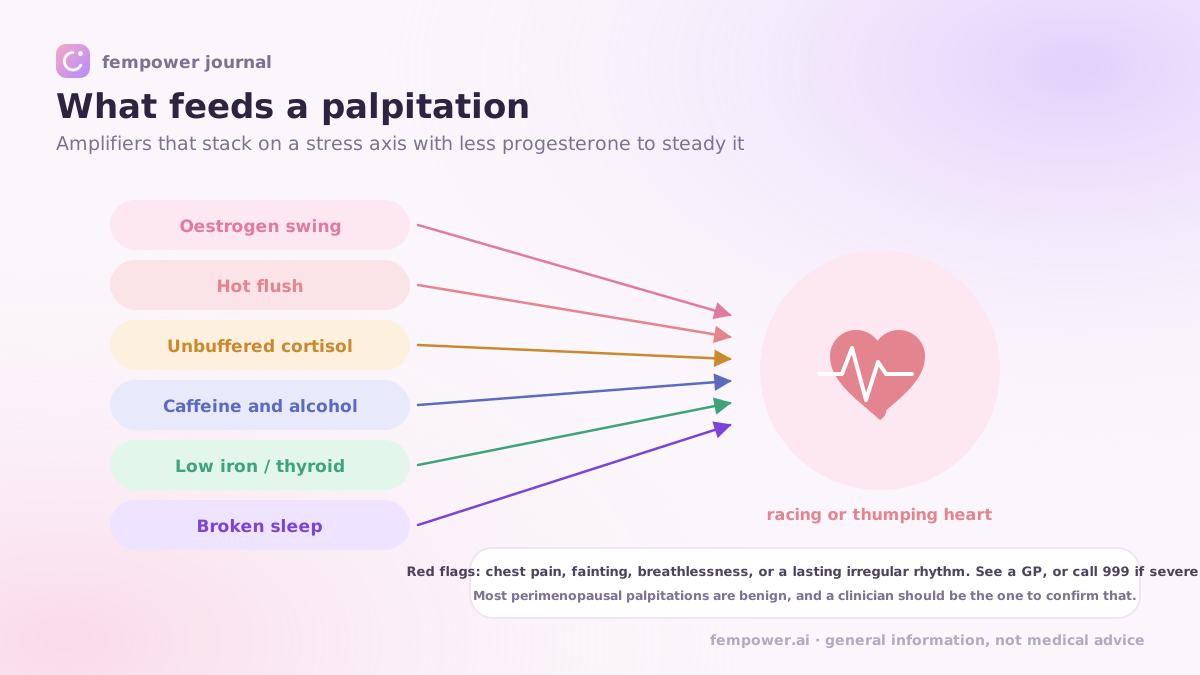
- Caffeine, alcohol, dehydration, low iron and poor sleep amplify them.
- Most are benign, but chest pain, fainting, breathlessness or an irregular sustained rhythm need urgent assessment.
You are lying in bed, or sitting in a meeting, and your heart suddenly takes off. It races, or thuds, or seems to skip and then land with a bang. It passes in a minute or two. Nothing shows up on a check-up. And nobody mentioned this was part of perimenopause. Palpitations are one of the transition's most alarming symptoms and one of its least discussed. This post explains the mechanism, the things that make them worse, and the signs that mean you should stop reading and call someone.
How common they are
A systematic review of palpitation prevalence across the menopause transition, led by Janet Carpenter, found rates ranging from a few per cent in premenopausal women to somewhere between one in five and two in five during perimenopause and after. Data from the SWAN study and others show the same jump at the transition. If you have them, they are common and they are real.
What oestrogen has to do with your heartbeat
Oestrogen acts on the autonomic nervous system, the automatic wiring that sets heart rate and blood vessel tone without you thinking about it. It tends to favour the calming, parasympathetic side. When oestrogen swings and falls in perimenopause, the balance tips towards the sympathetic side: faster heart rate, more reactive blood vessels, more adrenaline sensitivity.
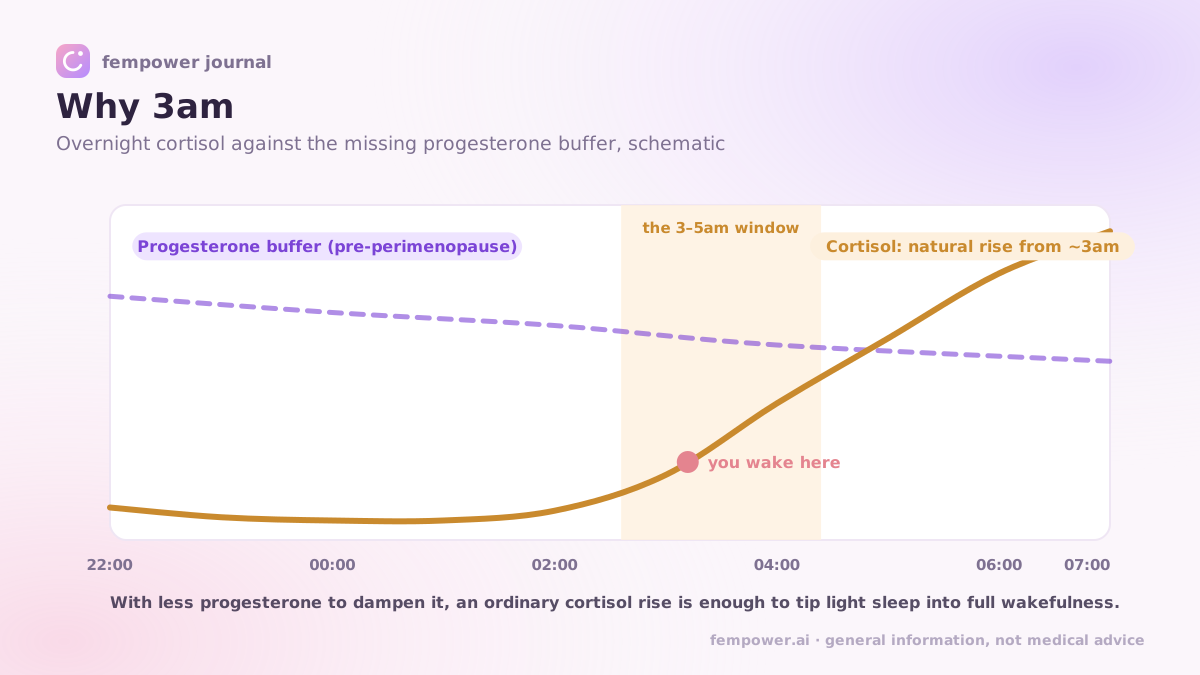
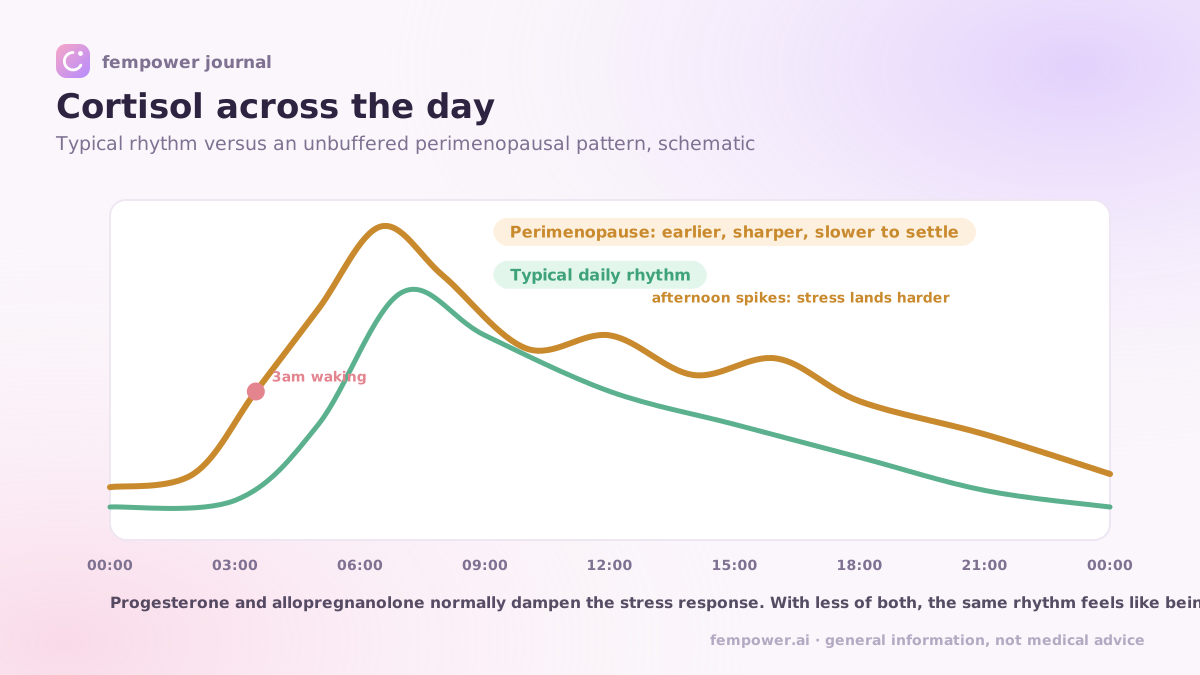
Progesterone matters too. It is calming through the GABA system, and it is usually the first hormone to decline. With less of it around, the stress axis loses its buffer, and the normal daily rise in cortisol and adrenaline, which starts in the small hours, lands harder. That is why palpitations so often arrive at 3am alongside a jolt of anxiety, and why they feel out of proportion to anything happening around you.
The hot flush connection
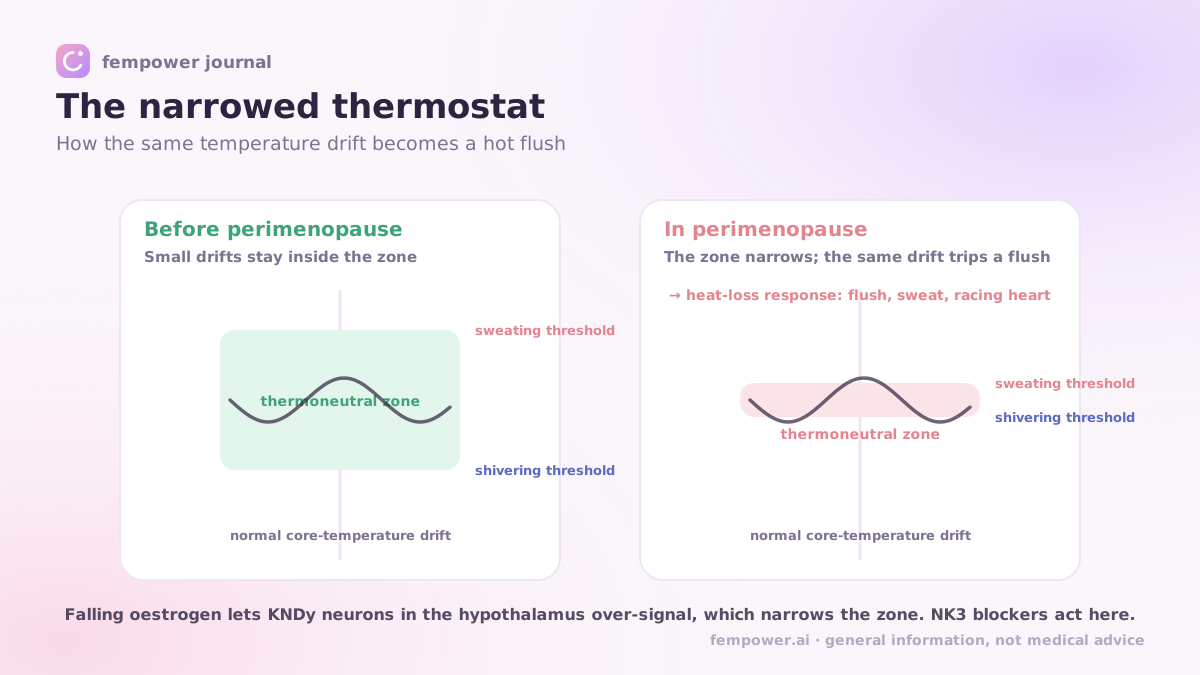
Palpitations and hot flushes are close relatives. A flush is triggered when the brain's thermostat misfires and orders emergency cooling. Part of that order is a burst of sympathetic activity: blood vessels in the skin open, sweating starts, and the heart speeds up to push blood to the surface. Many women feel the heart rate rise a few seconds before the heat arrives. If you get night sweats, the racing heart that wakes you may be the opening seconds of a flush.
The amplifiers
None of the following causes perimenopausal palpitations on its own. Each one raises the baseline so that an already sensitive system tips over more easily:
- Caffeine, especially after midday, and especially if your tolerance has quietly dropped.
- Alcohol, which speeds the heart, disrupts sleep architecture and triggers flushes in its own right.
- Dehydration, which lowers blood volume and makes the heart work faster to compensate.
- Low iron, common after years of heavy perimenopausal periods. Iron deficiency causes palpitations, breathlessness and fatigue directly.
- Poor sleep, which raises next-day cortisol and adrenaline, which raises the chance of palpitations, which disrupts sleep. The loop is real.
The practical upshot is that the same episode might be avoidable on a different day. Tracking what preceded each one is the fastest way to find your own pattern.
When it is not perimenopause
Most perimenopausal palpitations are benign: brief, self-limiting, and unaccompanied by anything else. But the heart deserves respect, and a few features mean the cause needs to be properly established:
- Chest pain or pressure, or pain spreading to the arm, jaw or back.
- Fainting or nearly fainting during an episode.
- Breathlessness that is out of proportion to what you are doing.
- A chaotic or irregular rhythm (different from a fast, steady one), or episodes that last many minutes to hours.
- A family history of sudden cardiac death or inherited heart conditions.
An overactive thyroid also causes palpitations, anxiety, sweating and weight loss, and can be mistaken for perimenopause in every respect. A simple thyroid blood test settles it.
Questions people ask
- Are heart palpitations a symptom of perimenopause?
- Yes. Studies report palpitations in roughly one in five to two in five women during the menopause transition, compared with a few per cent before it. Swinging oestrogen and falling progesterone shift the autonomic nervous system towards a faster, more reactive heart.
- Why do I get palpitations at night?
- Cortisol and adrenaline naturally rise from around 3am. With less progesterone to buffer that rise, it can feel like being jolted awake with a racing heart. Night sweats also begin with a burst of sympathetic activity that speeds the heart before the heat arrives.
- What makes perimenopausal palpitations worse?
- Caffeine, alcohol, dehydration, low iron from heavy periods, and poor sleep all raise the baseline so episodes are more likely.
- When should I worry about palpitations?
- Seek urgent help for palpitations with chest pain, fainting or severe breathlessness. See your GP if episodes are new, frequent, irregular, long-lasting or worrying you, and ask for an ECG, thyroid tests and ferritin.
References
- A systematic review of palpitations prevalence by menopausal status. Current Obstetrics and Gynecology Reports (Carpenter JS et al.), 2021.
- Palpitations across the menopause transition in SWAN: trajectories, characteristics, and associations with subclinical cardiovascular disease. Menopause (Carpenter JS, Thurston RC et al.), 2024.
- Menopause: identification and management (NG23). NICE, 2024.
- Palpitations. NHS, 2023.