Oestrogen doesn't just fall, it swings
For years, perimenopause means erratic oestrogen, with peaks above anything you had in your thirties and crashes to match. The swing is what you feel.
- Oestrogen
Key takeaways
- Perimenopausal oestrogen is erratic, and can peak above premenopausal levels.
- The change in level, especially the drop, is what triggers many symptoms.
- Oestrogen withdrawal is a known migraine trigger, which is why headaches often worsen in this phase.
- Because levels change day to day, a single blood test cannot tell you where you are.
- Steady oestrogen, from a patch or gel, is one reason HRT can calm symptoms that swings cause.
The word most people attach to menopause is "deficiency". Oestrogen goes down, symptoms go up. That is broadly true for the years after your last period. It describes the years before it badly, because during those years oestrogen is mostly unpredictable. Understanding that difference explains why perimenopause can feel worse than postmenopause, and why the standard advice sometimes misses.
What a normal cycle looks like
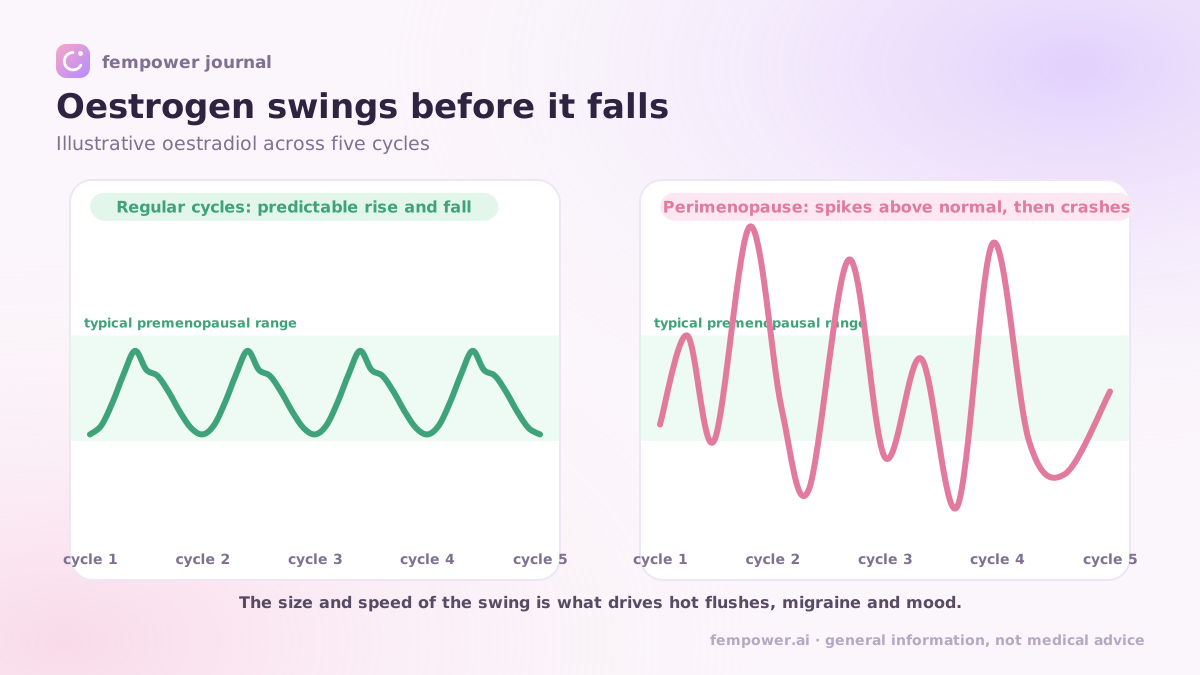
In a regular cycle, oestrogen rises through the first half as a follicle matures, peaks just before ovulation, dips, rises again more gently in the second half alongside progesterone, then falls at the end to trigger a period. It is a wave with a known shape. Your brain, blood vessels and temperature control have spent decades adapting to it.
What changes in perimenopause
As the ovaries age, the brain has to work harder to get a response. Follicle-stimulating hormone (FSH) rises to push the ovaries, and sometimes they respond with more than one follicle, or with a follicle that produces an unusually large amount of oestrogen. Researchers led by Nanette Santoro showed in 1996 that women in perimenopause had higher average oestrogen levels than younger women. Jerilynn Prior later described this period as oestrogen's "storm season".
So the pattern is: a spike well above your old peak, a crash when that follicle fails or ovulation does not happen, a quiet stretch, then another surge. The old wave becomes a jagged line. Over several years the average drifts down, but any given week could be high, low or in between.
Why the swing hurts more than the level
The body notices change more than it notices a steady state. Several systems are tuned to oestrogen and react when it moves.
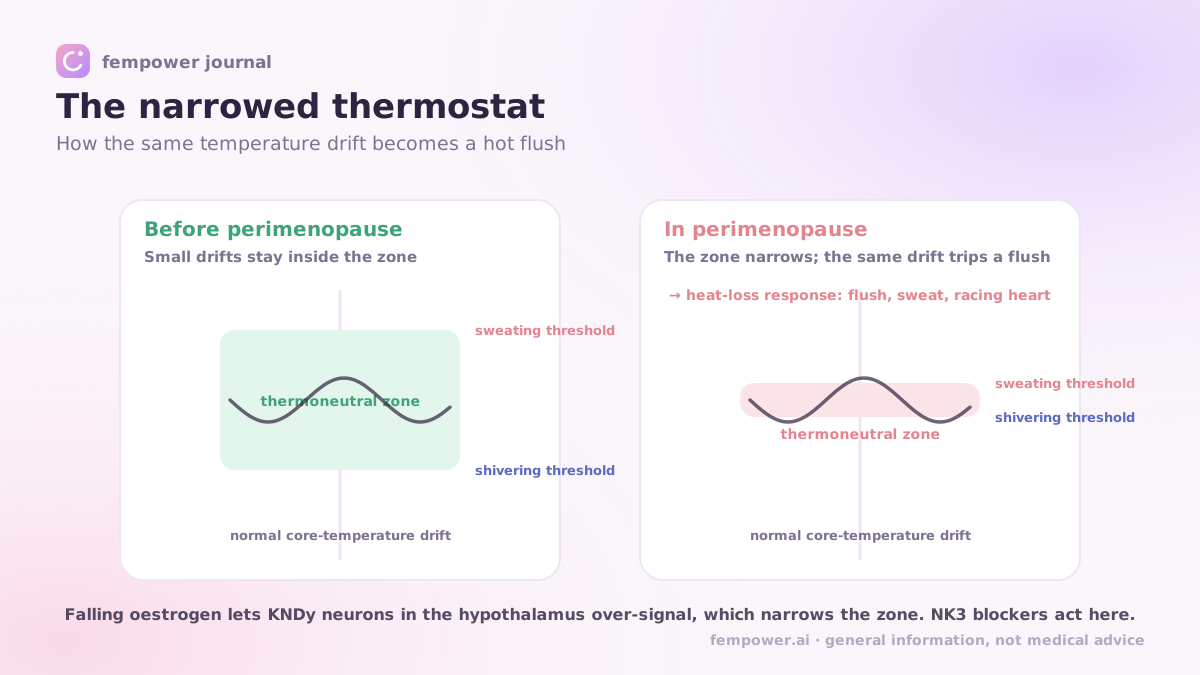
- Hot flushes. The brain's thermostat becomes unstable each time oestrogen drops. That is why flushes are often worst in the late transition when the swings are widest, and why a woman with high average oestrogen can still have them. The mechanism is in hot flushes explained.
- Migraine. Oestrogen withdrawal is a well-established migraine trigger. Menstrual migraine happens at the end of the cycle as oestrogen falls, and perimenopause creates many more of those falls, at unpredictable times. Women with a history of migraine often find it worsens in this phase and improves after menopause.
- Irritability and mood. Oestrogen affects serotonin and dopamine signalling. Rapid drops are linked to low mood and irritability, while spikes can bring restlessness and a wired feeling.
- Breast tenderness and bloating. High oestrogen, especially without progesterone to balance it, causes fluid retention and breast swelling. Those weeks are the peaks.
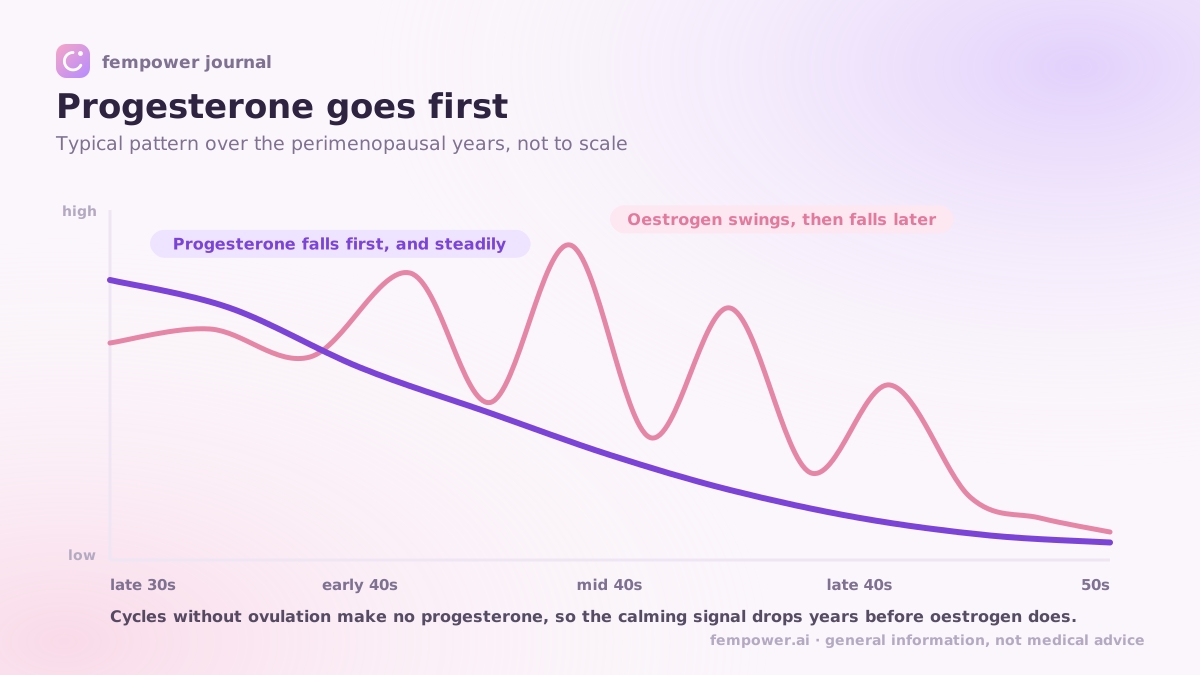
The high weeks and the low weeks feel different, and both are perimenopause. If your symptoms seem contradictory, breast pain one fortnight and a night sweat the next, this is why. The missing balance from progesterone makes it worse; see progesterone: the first hormone to fall.
Why a blood test will not tell you where you are
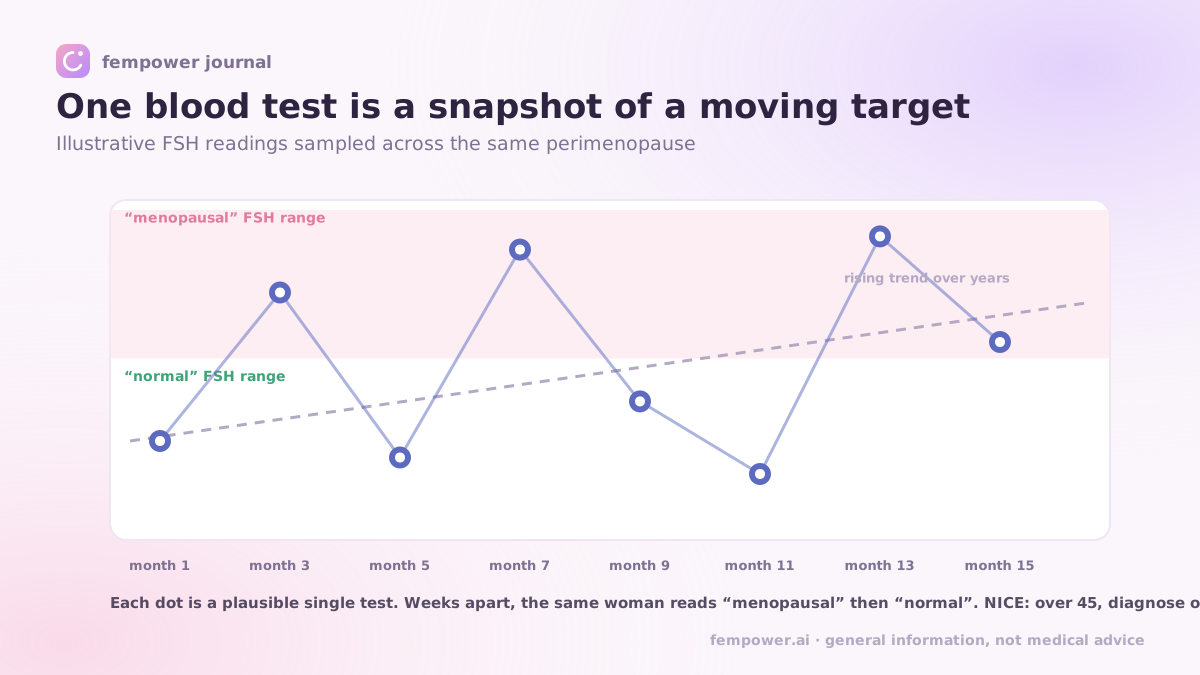
This is the practical consequence. A blood test measures one moment on a line that changes daily. Drawn during a spike, it says you are fine. Drawn during a crash, it says postmenopausal. Neither is wrong; neither is useful on its own. This is exactly why the NICE menopause guideline does not recommend hormone testing to diagnose perimenopause in women over 45, and why STRAW+10 stages the transition using cycle pattern. We go into it in why blood tests cannot diagnose perimenopause.
What helps
- Smooth what you can. Regular meals, steady sleep and limited alcohol reduce the extra volatility layered on top of the hormonal one.
- Track the timing. Migraine, mood dips and flushes that cluster at the end of a cycle point to oestrogen withdrawal. That pattern is useful evidence for a GP.
- Ask about steady delivery. Transdermal oestrogen (a patch or gel) delivers a constant level. For women whose symptoms are driven by fluctuation, evening out the line is part of why HRT works. This is a GP conversation.
- For migraine specifically, tell your GP. Migraine with aura affects which HRT options are appropriate, and transdermal oestrogen is generally preferred over tablets.
The short version
Perimenopause is a storm season, with oestrogen peaking higher and crashing lower than it ever did, on no fixed schedule. The swing is what you feel, and it is why single tests mislead and why symptoms can seem to contradict each other from one week to the next.
Questions people ask
- Is oestrogen high or low in perimenopause?
- Both, at different times. Research has shown that average oestrogen in perimenopause can be higher than in younger women, but it fluctuates widely, with spikes and crashes. Consistently low oestrogen is more typical after the final period.
- Why does perimenopause cause migraines?
- A drop in oestrogen is a known migraine trigger. Perimenopause produces many more of these drops, at unpredictable times, so women with a history of migraine often find it gets worse in this phase and eases after menopause.
- Can I have hot flushes if my oestrogen is not low?
- Yes. Hot flushes are triggered by oestrogen falling. A woman whose average level is normal or high can still flush when it drops after a spike.
- Why did my hormone blood test come back normal?
- Because oestrogen and FSH change from day to day in perimenopause, one test shows only one moment. NICE does not recommend hormone tests to diagnose perimenopause in women over 45 for this reason.
References
- Characterization of reproductive hormonal dynamics in the perimenopause. Journal of Clinical Endocrinology & Metabolism (Santoro N et al.), 1996.
- Perimenopause: the complex endocrinology of the menopausal transition. Endocrine Reviews (Prior JC), 1998.
- Menopause: identification and management (NG23). NICE, 2024.
- Executive summary of the Stages of Reproductive Aging Workshop + 10. Menopause (Harlow SD et al.), 2012.
- Migraine and HRT. British Menopause Society, 2023.