Cortisol: your stress axis without its buffer
Wired but tired. Jolted awake before dawn. Overreacting to small things and unable to switch off. Cortisol is doing what it always did. What changed is what used to hold it in check.
- Cortisol
- Progesterone
- Oestrogen
Key takeaways
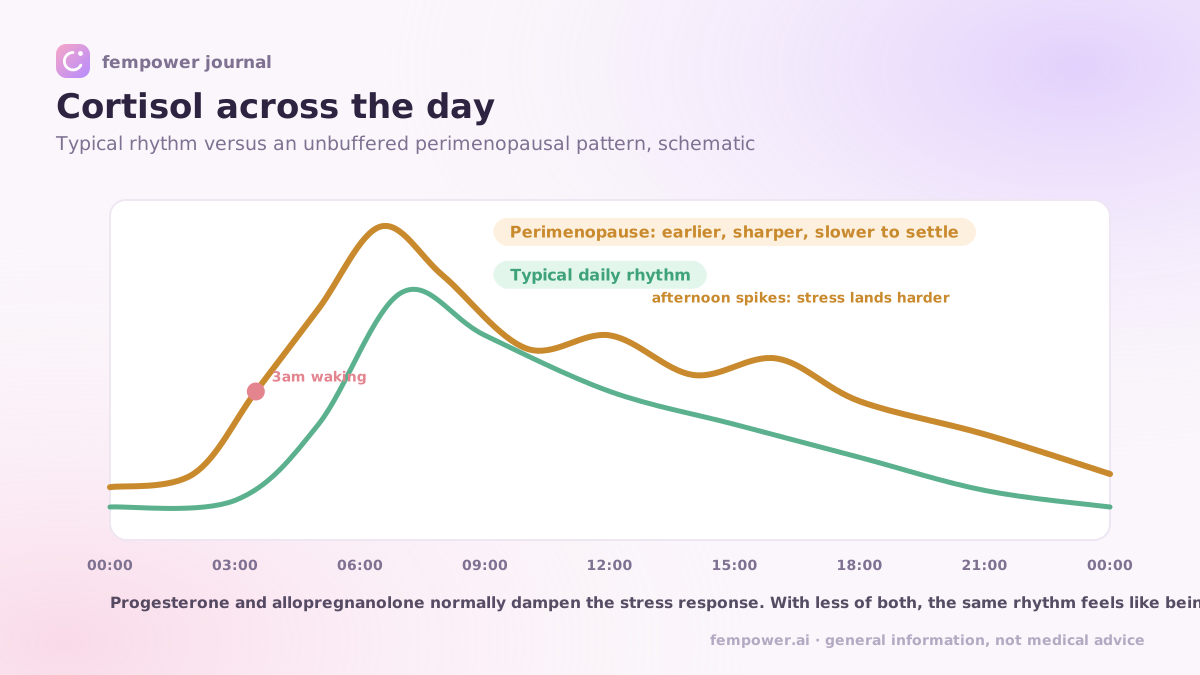
- Cortisol follows a daily rhythm, lowest near midnight and rising from about 3am to a peak shortly after waking.
- Progesterone and its metabolite allopregnanolone normally dampen the stress response. Perimenopause removes that buffer.
- Erratic oestrogen makes the stress axis more reactive, so ordinary pressures land harder.
- The result is early waking, palpitations and feeling wired but tired.
- Morning light, protein at breakfast, caffeine timing, strength training and not over-fasting are the levers with evidence. 'Adrenal fatigue' is not a recognised diagnosis.
Cortisol has a worse reputation than it deserves. It is the hormone that gets you out of bed, keeps your blood sugar steady, tunes your immune system and lets you respond to a genuine threat. In perimenopause cortisol itself carries on much as before. What changes is the system that used to keep it in proportion.
The HPA axis in one paragraph
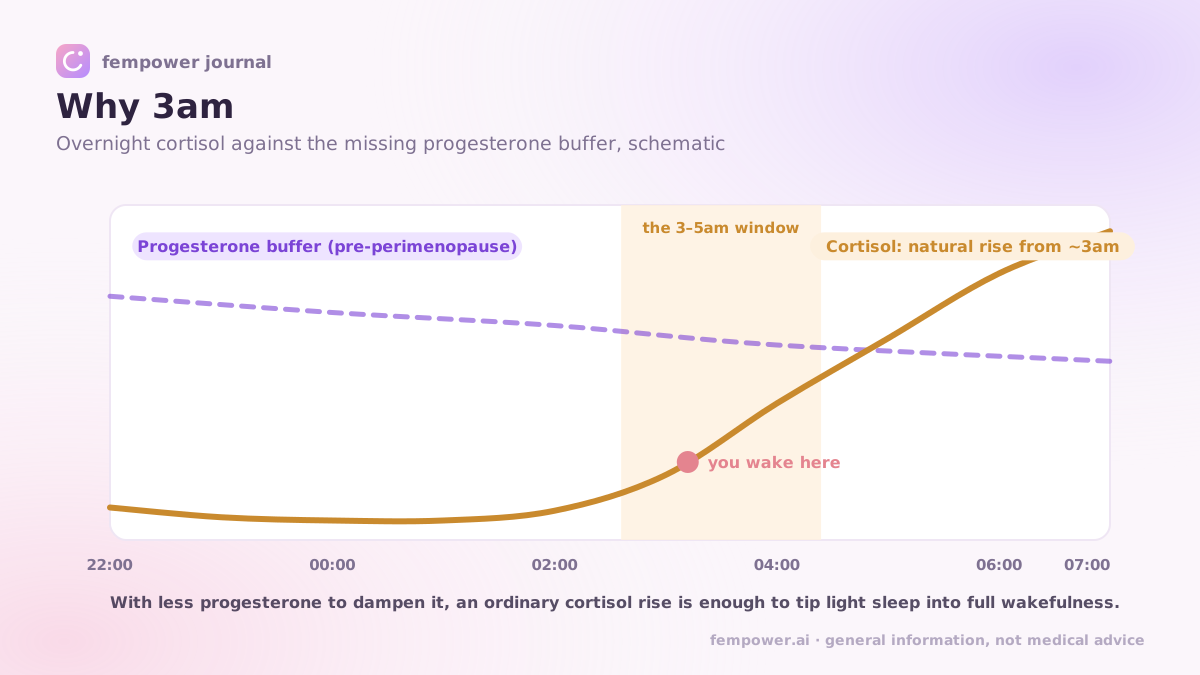
The hypothalamic-pituitary-adrenal axis is the chain of command for stress. The hypothalamus in the brain signals the pituitary, the pituitary signals the adrenal glands, and the adrenals release cortisol. Cortisol then feeds back to the brain to switch the signal off. It is a loop with a brake built in. The whole system also runs on a daily clock. Cortisol is lowest around midnight, starts to rise from roughly 3am, and reaches its highest point in the 30 to 45 minutes after you wake. That morning surge is called the cortisol awakening response, and it is normal, healthy and the reason you feel more alert an hour after getting up than the moment you open your eyes.
What progesterone was doing
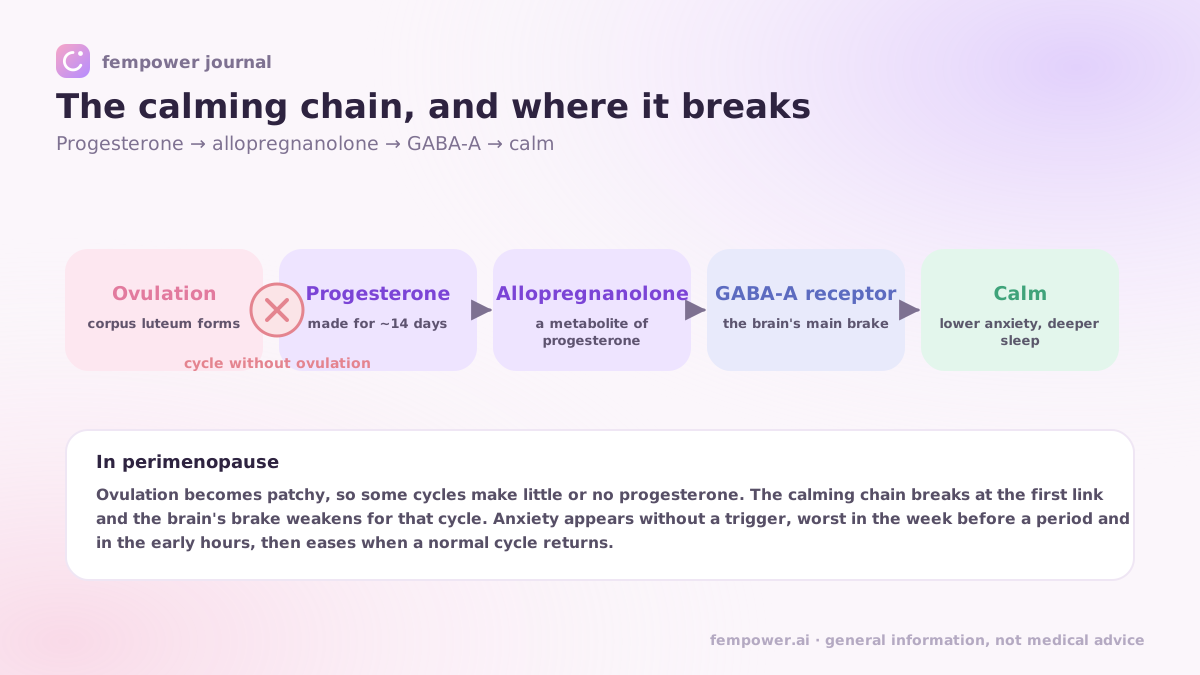
Progesterone is converted in the brain into allopregnanolone, which acts on GABA-A receptors, the brain's main calming system. We covered this in the post on anxiety. One of the things that calming signal does is dampen the HPA axis. It softens the stress response, blunts the size of cortisol surges, and helps the brake work. In a normal cycle, this buffering is strongest in the second half, after ovulation. As ovulation becomes patchy in perimenopause and progesterone falls, the buffer goes with it. The ordinary 3am rise in cortisol, which used to happen quietly while you slept, now arrives without anything to soften it. That is a large part of why so many women in perimenopause describe waking suddenly between 3am and 4am, heart going, mind already running.
What oestrogen was doing
Oestrogen modulates the HPA axis too, in a more complicated way. At steady levels it appears to help regulate the size of the stress response and the speed of recovery. When levels swing, the axis becomes more reactive. Research in perimenopausal women has found larger cortisol responses to laboratory stressors, and slower return to baseline, compared with premenopausal women facing the same task. The stressor is identical, and the response is larger. This is the biology behind the feeling that you are overreacting to things that never used to touch you.
How it feels
- Early waking. Awake at 3am or 4am and unable to get back to sleep.
- Wired but tired. Exhausted all day and unable to switch off at night.
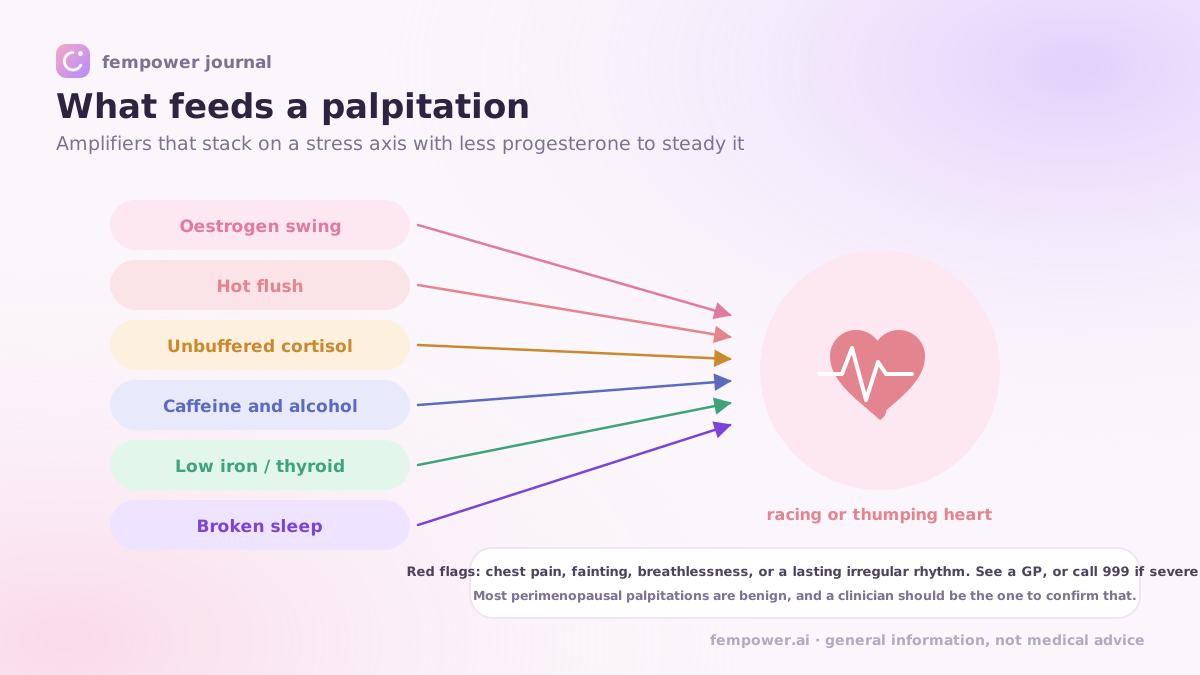
- Palpitations. A pounding or racing heart, often at rest or on waking. Usually benign but see the GP note below.
- A short fuse. Irritation and rage over small things, followed by guilt.
- Cravings and a soft middle. Cortisol raises blood sugar and encourages fat storage around the abdomen.
- Feeling permanently switched on. Vigilant, jumpy, unable to relax even when nothing is wrong.
The levers that move cortisol
You cannot switch the stress axis off, and you would not want to. You can stop pushing it in the wrong direction, though, and you can strengthen the daily rhythm so the morning peak lands where it should.
- Morning light. Ten to twenty minutes of daylight soon after waking anchors the body clock and makes the cortisol peak sharper in the morning and lower at night. It is the single cheapest intervention on this list.
- Protein at breakfast. A meal with real protein steadies blood sugar through the morning, which reduces the need for cortisol to prop it up.
- Caffeine after the peak. Caffeine raises cortisol. Having it 60 to 90 minutes after waking, once the natural surge is passing, means less stacking. Nothing after early afternoon.
- Resistance training. Regular strength work improves cortisol regulation and sleep over time, and builds the muscle perimenopause is trying to take. Very long, very intense sessions can do the opposite, so keep sessions moderate.
- Do not over-fast. Long fasting windows and very low-calorie eating raise cortisol. Women in perimenopause tend to tolerate aggressive fasting poorly. Regular meals with protein are more helpful than skipped ones.
- Alcohol. It helps you fall asleep and then wakes you at 3am as it wears off, right as cortisol is rising. If you have one lever to pull for early waking, this is often it.
A word on 'adrenal fatigue'
You will encounter this term online, usually attached to a supplement. It is not a recognised medical diagnosis. The Endocrine Society and other professional bodies have reviewed the evidence and found no support for the idea that adrenal glands become exhausted from stress. Genuine adrenal insufficiency (Addison's disease) exists, is rare and serious, and is diagnosed with specific tests. The symptoms sold under adrenal fatigue are real, but they are far better explained by perimenopause, poor sleep, iron deficiency, thyroid problems or depression, all of which can be tested for. Be wary of anyone offering a saliva cortisol panel and a bottle of something to fix it.
Cortisol has lost its shelter. Understanding what used to shield it, and what still can, turns a frightening set of symptoms into a manageable one. The science page explains how all five drivers fit together.
Questions people ask
- Does perimenopause raise cortisol?
- Baseline levels do not reliably rise. What perimenopause does is remove the progesterone buffer that dampened the stress response and make the HPA axis more reactive. The same cortisol rise feels sharper and recovery is slower.
- Why do I wake at 3am in perimenopause?
- Cortisol naturally begins rising from about 3am. With less progesterone and allopregnanolone to soften that rise, it can arrive as a jolt that wakes you. Alcohol in the evening makes it worse.
- Is adrenal fatigue real?
- No. It is not a recognised medical diagnosis and professional bodies have found no evidence for it. The symptoms attributed to it are real but are better explained by perimenopause, poor sleep, iron deficiency, thyroid problems or depression, which can all be tested for.
- What lowers cortisol naturally?
- Morning daylight, a protein-based breakfast, delaying caffeine until an hour or so after waking, regular strength training, avoiding long fasts and cutting evening alcohol all have evidence for improving cortisol rhythm.
- Are palpitations in perimenopause dangerous?
- Usually not, and they are common. But palpitations with chest pain, breathlessness, faintness, during exercise, or lasting more than a few minutes need a GP assessment.
References
- Perimenopause: the complex endocrinology of the menopausal transition. Endocrine Reviews (Prior JC), 1998.
- Progesterone reduces wakefulness in sleep EEG and has no effect on cognition in healthy postmenopausal women. Psychoneuroendocrinology (Schüssler P et al.), 2008.
- Adrenal fatigue does not exist: a systematic review. BMC Endocrine Disorders (Cadegiani FA, Kater CE), 2016.
- Menopause: identification and management (NG23). NICE, 2024.