Aching joints? The musculoskeletal syndrome of menopause
Stiff hands in the morning, a shoulder that will not lift, knees that complain on the stairs. In 2024 researchers proposed a name for this cluster and made the case that it is hormonal.
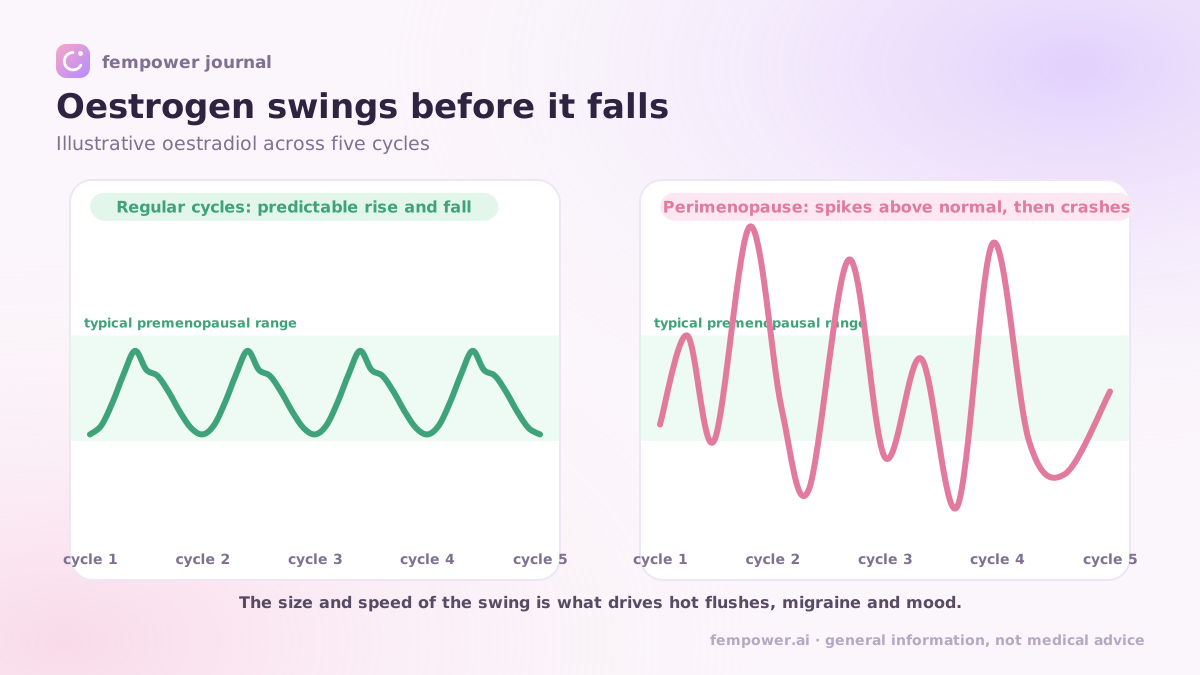
- Oestrogen
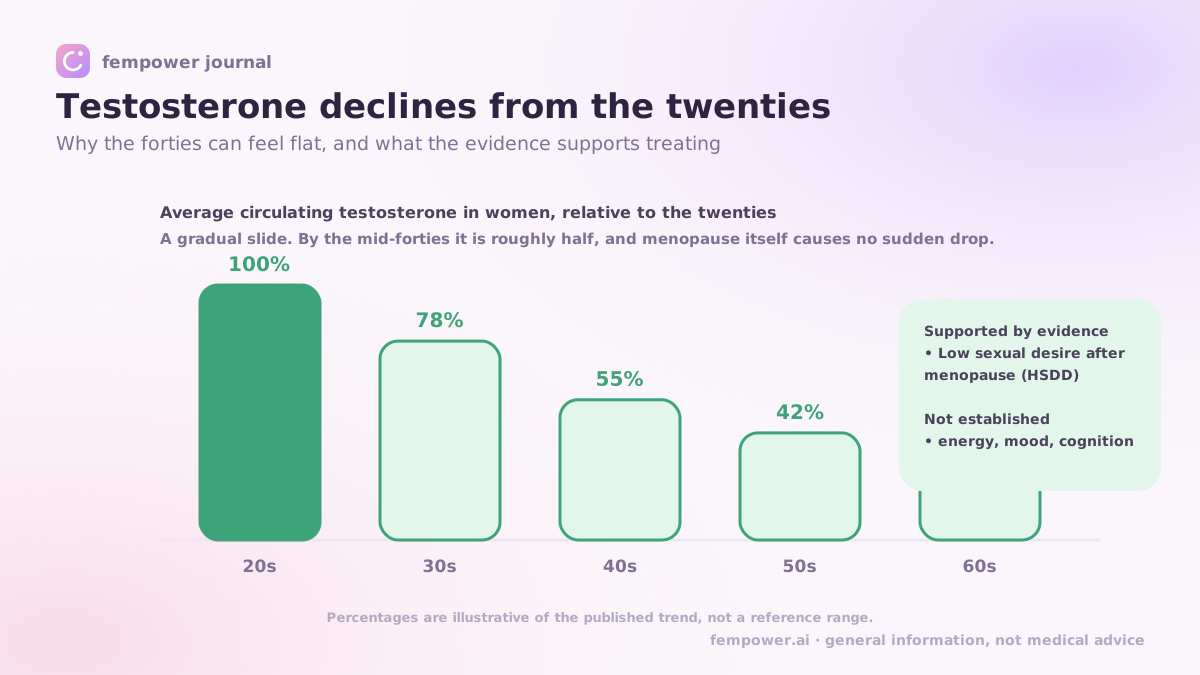
- Testosterone
Key takeaways
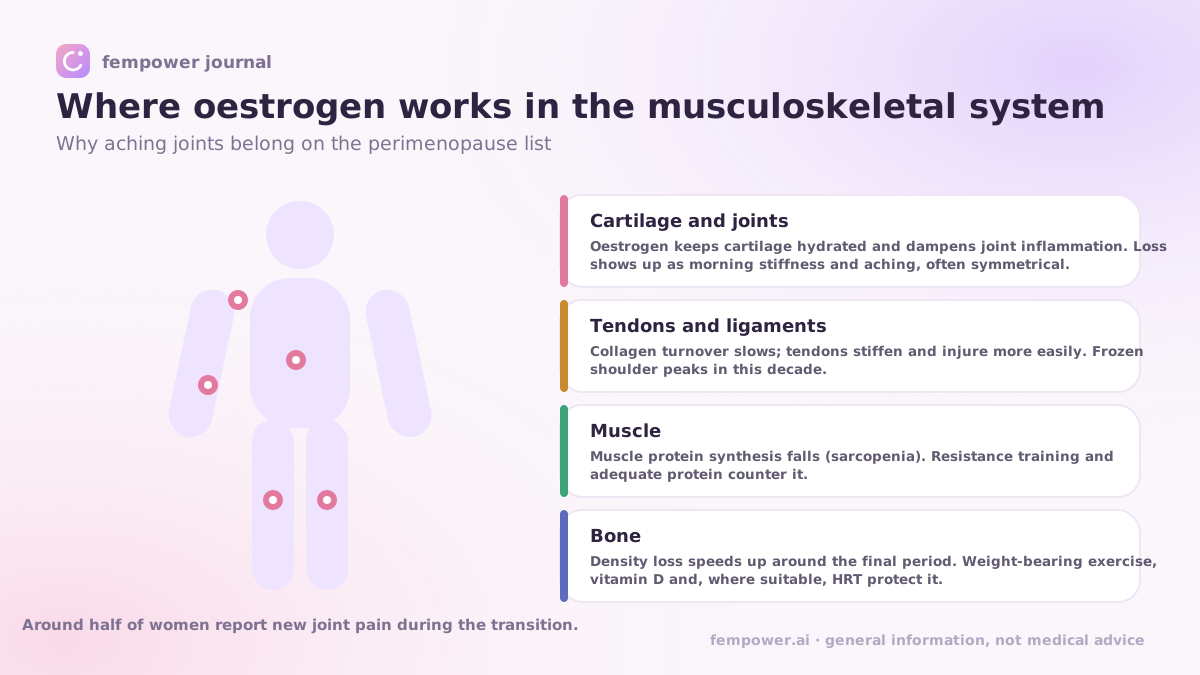
- Joint and muscle pain affects roughly half of women in the menopause transition and often starts before periods stop.
- In 2024, Wright and colleagues proposed the term 'musculoskeletal syndrome of menopause' to capture it.
- Oestrogen acts on cartilage, tendon, muscle and bone. Frozen shoulder and morning stiffness are classic presentations.
- Resistance training, adequate protein and vitamin D are the foundations. HRT reduced joint pain in secondary analyses of the WHI.
- Swollen, hot or symmetrical small-joint pain needs a GP, because inflammatory arthritis also peaks at this age.
Joint pain is one of the perimenopausal symptoms least likely to be recognised as one. Women are told they are getting older, that they have overdone it in the gym, or that it is probably wear and tear. Sometimes it is. But when stiffness, aches and a shoulder that suddenly will not move all arrive together in a woman in her late forties, the common thread is usually hormonal, and the research has finally started to say so.
A syndrome gets a name
In 2024, orthopaedic surgeon Vonda Wright and colleagues published a paper in the journal Climacteric proposing the term musculoskeletal syndrome of menopause. Their argument was that the joint pain, loss of muscle, tendon problems and accelerating bone loss seen around menopause add up to a single, hormonally driven picture. They estimated that more than 70 per cent of women experience some musculoskeletal symptom in the transition, and that around a quarter are significantly affected. Naming something matters, even before it changes treatment. It gives clinicians a reason to ask about the menopause when a woman presents with a stiff shoulder, and it gives women a reason to mention their joints when they are talking about hot flushes.
What oestrogen does in your joints
Oestrogen receptors are found in every tissue that makes up a joint, and the hormone does something useful in each.
- Cartilage. Oestrogen helps keep cartilage hydrated and supports the cells that maintain it. It also has an anti-inflammatory effect within the joint itself, which is one reason falling levels bring stiffness and aching without visible damage on an X-ray.
- Tendons and ligaments. Oestrogen influences collagen turnover and elasticity. Tendons become stiffer and slower to repair. This is thought to be part of why frozen shoulder (adhesive capsulitis) is so common in women in their fifties.
- Muscle. Oestrogen supports muscle stem cells and protein synthesis. Its loss accelerates sarcopenia, the age-related loss of muscle mass and strength, and slows recovery after exercise. Testosterone, which is also declining, matters here too.
- Bone. Oestrogen restrains the cells that break bone down. Once it falls, bone loss speeds up sharply, with the fastest decline in the first few years after the final period.
Put together, the effect is a body that aches more, recovers more slowly and is losing the muscle that protects its joints, at exactly the point when it most needs it.
How it shows up
The classic description is stiffness on waking that eases with movement, aching in the hands, knees, hips and lower back, and a general sense of being creaky. Some women notice their grip weakening or that jars are harder to open. Frozen shoulder is a distinct presentation: pain and then progressive loss of movement in one shoulder, typically over months, with no injury to explain it. Plantar fasciitis and tennis elbow also become more common. Many women with these symptoms have completely normal blood tests and scans, which is part of why the connection to hormones is so often missed. Low oestrogen tends to be the lead driver, and symptoms often worsen in the low-oestrogen days around a period before becoming more constant.
What helps
- Resistance training. The single best-evidenced thing you can do. Two or three sessions a week of progressive strength work preserves muscle, loads bone and stabilises joints. Start light and build up over time.
- Protein. Muscle protein synthesis becomes less efficient with age and oestrogen loss. Most guidance suggests spreading protein across the day, with a decent portion at each meal, breakfast included.
- Vitamin D. UK guidance recommends a daily supplement for adults through autumn and winter, and year-round for people who get little sun. Check with your GP or pharmacist if you are unsure of the dose.
- Keep moving. Stiff joints respond well to gentle regular movement. Walking, swimming and cycling all count.
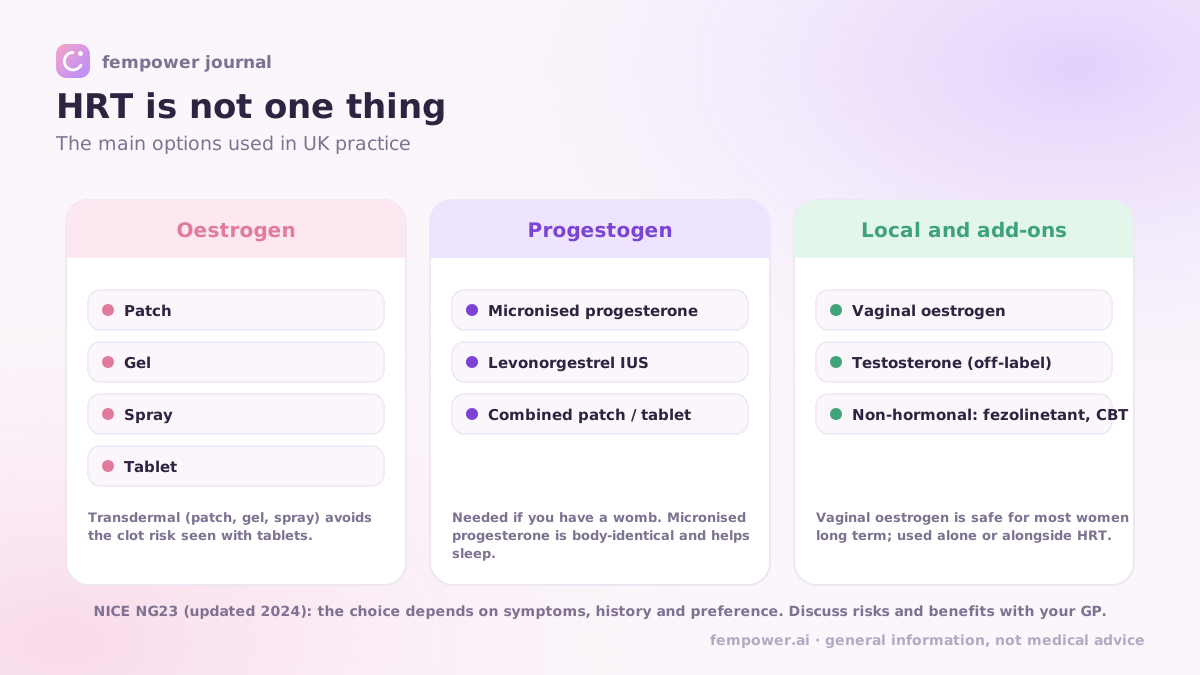
- HRT. Joint pain was not a primary outcome of the Women's Health Initiative, but secondary analyses found that women on oestrogen reported less joint pain and stiffness than those on placebo. NICE lists HRT as an option for menopause-related musculoskeletal symptoms. It is worth raising with your GP.
The bigger picture
Musculoskeletal symptoms are the ones that shape the next thirty years. Hot flushes end. Bone lost in your fifties and muscle not built in your forties are harder to recover. Taking joint pain seriously as a perimenopausal symptom is an argument for acting early. The science page explains how the app weights each of the five hormone drivers, and our post on how long perimenopause lasts covers the timeline.
Questions people ask
- Can perimenopause cause joint pain?
- Yes. Around half of women experience new joint pain or stiffness during the menopause transition. Oestrogen has receptors in cartilage, tendon, muscle and bone, and its decline affects all four.
- What is the musculoskeletal syndrome of menopause?
- A term proposed by Wright and colleagues in 2024 to describe the cluster of joint pain, muscle loss, tendon problems and bone loss driven by falling oestrogen around menopause.
- Is frozen shoulder linked to menopause?
- Frozen shoulder is markedly more common in women in their fifties, and oestrogen's role in tendon and capsule elasticity is thought to be part of the reason. Research into hormone treatment for it is ongoing.
- Does HRT help joint pain?
- Secondary analyses of the Women's Health Initiative found less joint pain and stiffness in women taking oestrogen than placebo, and NICE lists HRT as an option for menopause-related musculoskeletal symptoms. Discuss it with your GP.
- How do I know if my joint pain is arthritis instead?
- Swollen, hot or red joints, symmetrical pain in the small joints of the hands or feet, morning stiffness over an hour, or fatigue and fever alongside joint pain all need a GP assessment for inflammatory arthritis.
References
- The musculoskeletal syndrome of menopause. Climacteric (Wright VJ et al.), 2024.
- Menopause: identification and management (NG23). NICE, 2024.
- Effects of estrogen with and without progestin on joint symptoms: the Women's Health Initiative randomized trials. Menopause (Chlebowski RT et al.), 2013.
- Vitamin D: supplement use in specific population groups. NICE / Public Health England, 2016.