What perimenopause is (and when it starts)
Perimenopause is a stretch of years, often starting in your early forties, when your hormones change long before your periods stop.
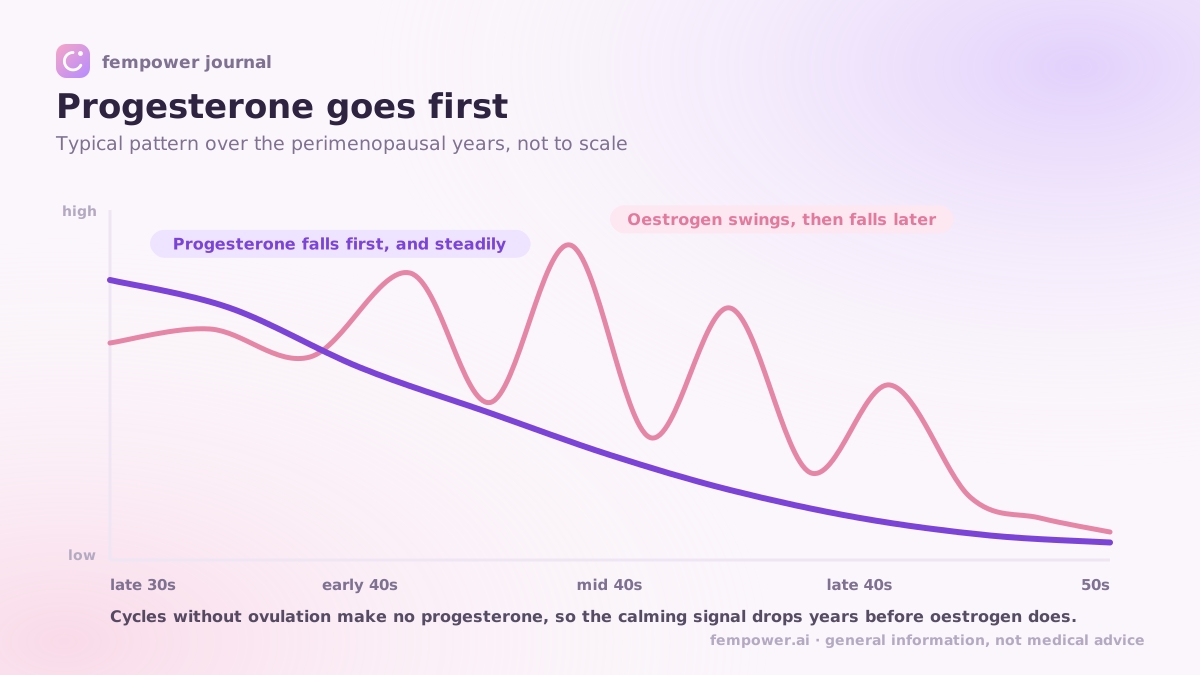
- Progesterone
- Oestrogen
Key takeaways
- Perimenopause is the transition before menopause, and it usually lasts four to ten years.
- It most often begins somewhere between the late thirties and mid forties. The average age of the last period in the UK is 51.
- Clinicians stage it by changes in your cycle. Blood tests only play a supporting role.
- Symptoms often arrive years before periods become noticeably irregular.
- If you are over 45 with typical symptoms, NICE says a diagnosis can be made on symptoms alone.
Most people picture menopause as a single event: your periods stop, you get hot flushes, and that is that. The reality is a slow, uneven transition that starts years earlier and looks different from one woman to the next. That transition is perimenopause, and understanding what it is makes almost everything else easier to make sense of.
Three words, three different things
The vocabulary trips people up, so here is the plain version.
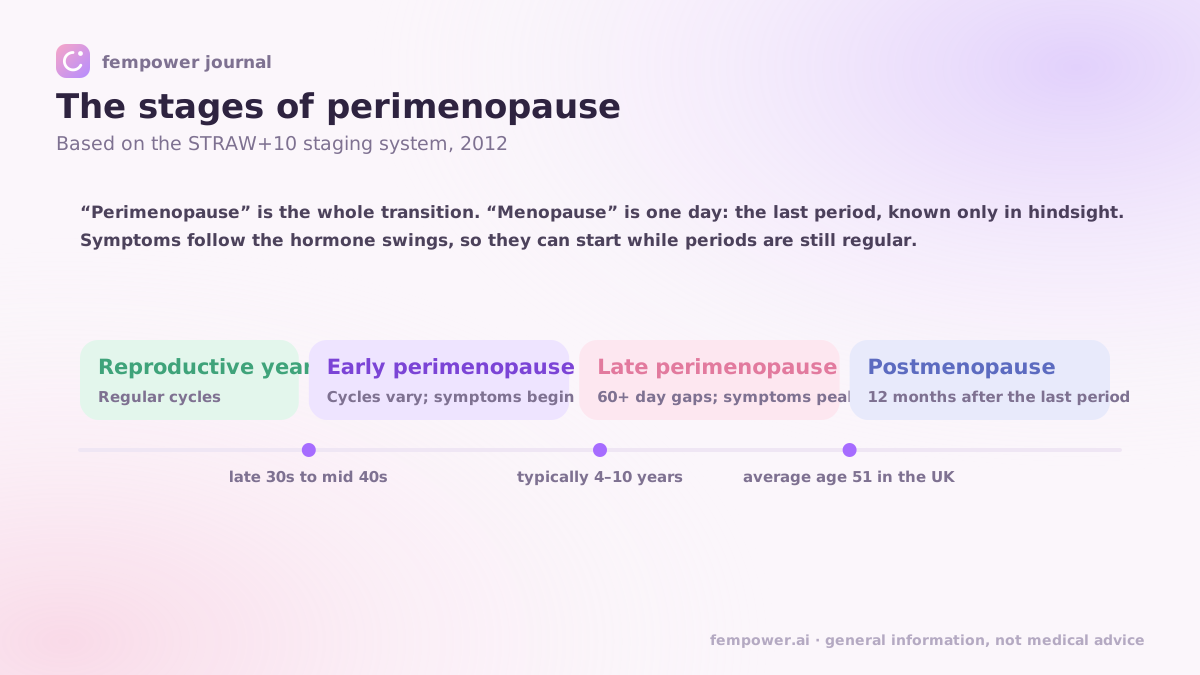
- Menopause is technically a single day: the date of your final period. You only know it was your last one after twelve months without another.
- Perimenopause is the stretch of time leading up to that day, when your ovaries gradually change how they work. This is when most symptoms happen.
- Postmenopause is everything after that twelve-month mark. Some symptoms continue into it, others ease.
When someone says they are "going through the menopause", they almost always mean perimenopause. It is the part you feel.
How clinicians stage it
The standard framework is called STRAW+10, agreed by an international group of researchers in 2011 and published in 2012. It divides the reproductive lifespan into stages, and the ones that matter here are the two transition stages.
- Early menopausal transition. Your cycles are still mostly regular, but the length starts to vary by seven days or more from one cycle to the next. A 26-day cycle followed by a 34-day one counts.
- Late menopausal transition. You go sixty days or more without a period at some point. This stage typically lasts one to three years and is when hot flushes are most likely to appear or intensify.
- Early postmenopause. The first few years after your final period, when hormone levels settle at their new baseline.
Notice that the staging rests on your cycle. STRAW+10 uses hormone levels only as supporting evidence, because in perimenopause they move around too much to be reliable on their own.
When it starts, and how long it lasts
There is no fixed age. The transition most often begins between the late thirties and mid forties, and the average age of the final period in the UK is around 51. Put those together and you get a transition that commonly runs four to ten years. Some women have a short, sharp version. Others describe a decade of gradual change.
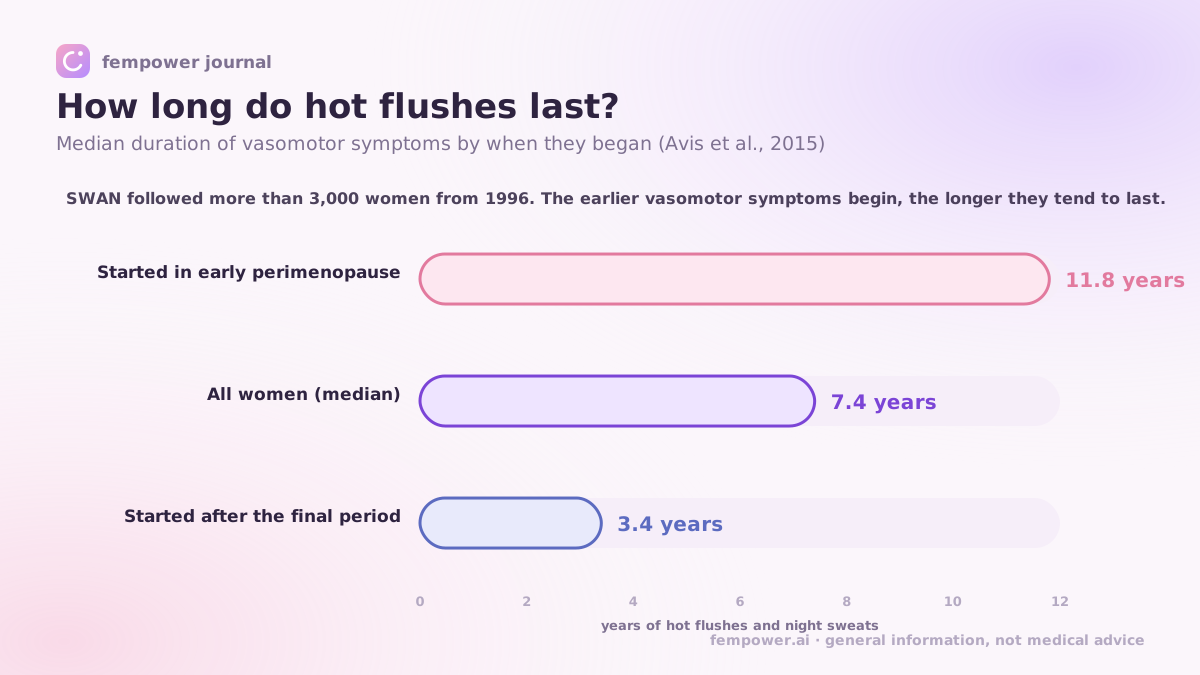
The Study of Women's Health Across the Nation (SWAN), which has followed thousands of women through the transition since the 1990s, found that some symptoms, particularly hot flushes and night sweats, last a median of just over seven years. That figure surprised a lot of clinicians, and it changed how long people were told to expect symptoms. There is more on that in how long perimenopause lasts.
Perimenopause before 45 is described as early, and before 40 it is called premature ovarian insufficiency. Both deserve a proper conversation with a GP because the approach to treatment differs.
Why the symptoms come before the irregular periods
This is the part that catches people out. The earliest change in perimenopause is usually progesterone falling, well before oestrogen does, because more of your cycles stop releasing an egg, and without ovulation there is no progesterone surge in the second half of the cycle. Your periods may still arrive on time, so nothing looks different on a calendar. But you may be sleeping worse, waking at 3am, feeling anxious for no reason, or bleeding more heavily than you used to.
Oestrogen, meanwhile, does not decline in a neat line. It swings, sometimes higher than it ever was in your thirties, then drops. That is why symptoms can come and go week to week. We cover both in Progesterone: the first hormone to fall and Oestrogen doesn't just fall, it swings.
Why "your bloods are normal" happens
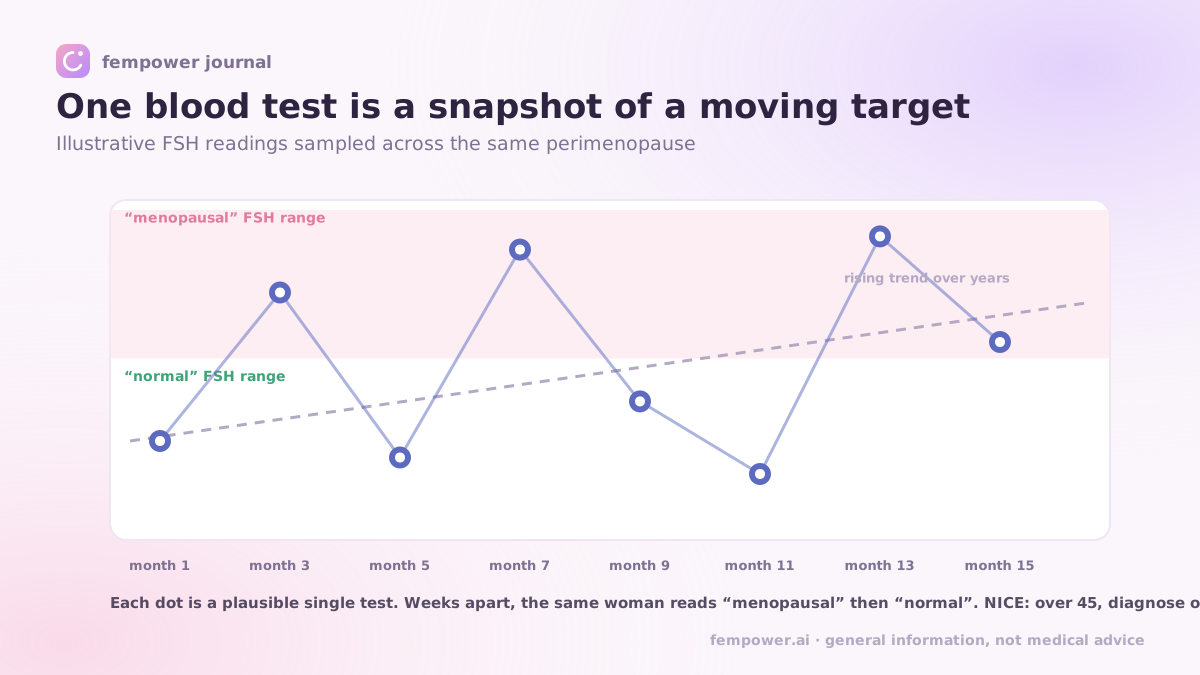
Many women are told their blood results are normal while feeling anything but. A single blood test captures one moment, and in perimenopause the hormones being measured change from week to week and even day to day. A follicle-stimulating hormone (FSH) reading that looks postmenopausal on Tuesday can look entirely ordinary the following month.
This is why the NICE menopause guideline says that in women over 45 with typical symptoms, perimenopause can be diagnosed on symptoms alone, without a blood test. Tests are reserved for younger women or unclear cases. If you want the detail, read why blood tests cannot diagnose perimenopause.
The short version
Perimenopause is a transition that runs for years. It usually starts in your forties, it is staged by changes to your cycle, and its earliest symptoms often show up while your periods still look normal. If that description sounds like you, you are not imagining it, and there are things that help. The FAQ answers the most common follow-up questions.
Questions people ask
- What is the difference between perimenopause and menopause?
- Menopause is the date of your final period, confirmed after twelve months without one. Perimenopause is the transition of several years before it, when hormones change and most symptoms occur.
- At what age does perimenopause start?
- Most often between the late thirties and mid forties, though it varies. The average age of the final period in the UK is around 51, and the transition typically lasts four to ten years.
- Can you be in perimenopause with regular periods?
- Yes. The earliest changes, particularly falling progesterone, often happen while periods still arrive on time. Symptoms like poor sleep, anxiety and heavier bleeding can appear before cycles become irregular.
- Do I need a blood test to confirm perimenopause?
- Usually not. NICE guidance says that in women over 45 with typical symptoms, a diagnosis can be made on symptoms alone. Blood tests are used for younger women or unclear cases because hormone levels fluctuate too much to be reliable in the transition.
References
- Menopause: identification and management (NG23). NICE, 2024.
- Executive summary of the Stages of Reproductive Aging Workshop + 10: addressing the unfinished agenda of staging reproductive aging. Menopause (Harlow SD et al.), 2012.
- Perimenopause: the complex endocrinology of the menopausal transition. Endocrine Reviews (Prior JC), 1998.
- Duration of menopausal vasomotor symptoms over the menopause transition. JAMA Internal Medicine (Avis NE et al., SWAN), 2015.
- Menopause: what is the menopause?. British Menopause Society, 2023.