Magnesium for sleep: what the evidence supports
Magnesium is suggested for sleep more than almost anything else. The evidence is real but modest, and the details matter: the form, the amount, and whether you test it properly.
- Progesterone
- Cortisol
Key takeaways
- Magnesium has a plausible mechanism for sleep: it dampens the excitatory NMDA system and supports the calming GABA system.
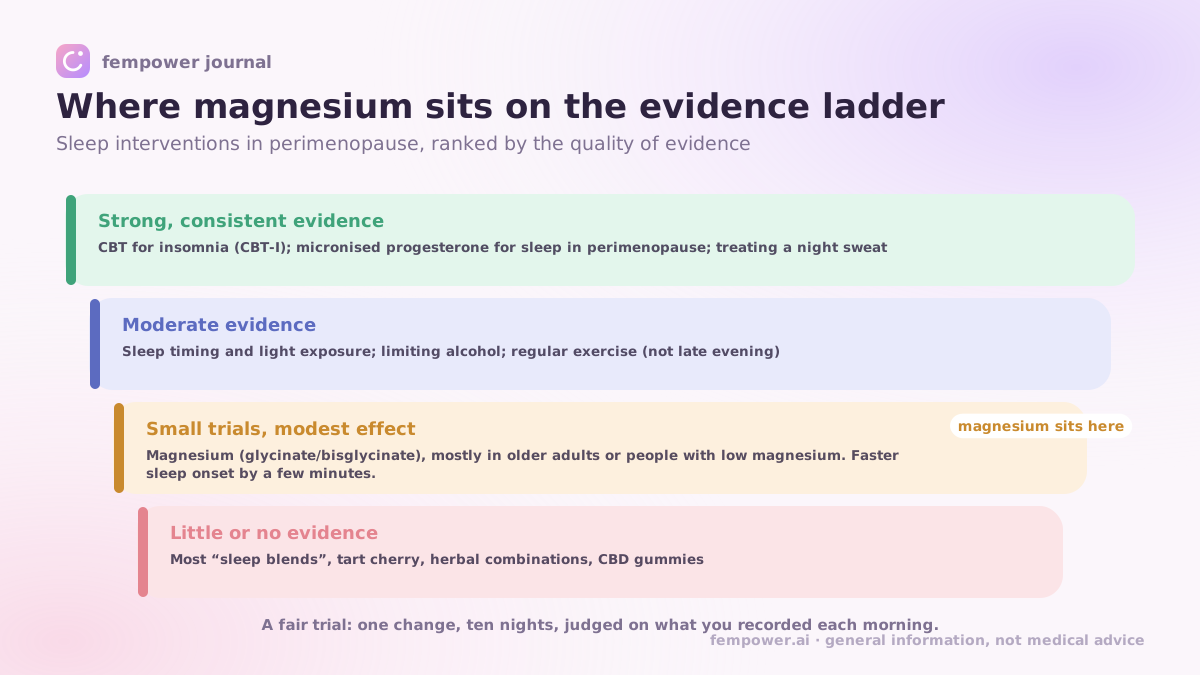
- The trials are small, short, and mostly in older adults or people who were already low in magnesium. A 2021 systematic review found low-quality evidence of a modest benefit, mainly in falling asleep faster.
- Glycinate (bisglycinate) is the form most people tolerate. Citrate loosens the bowels. Oxide is poorly absorbed.
- Studies typically used around 200 to 400 mg of elemental magnesium. Check with your GP or pharmacist first if you have kidney disease or take certain medicines.
- Run a fair ten-day trial and judge it on what you recorded each morning.
Ask anyone in perimenopause what they have tried for sleep and magnesium is usually near the top of the list. It is cheap, it is available everywhere, and it comes with a story that sounds convincing. This post is about how much of that story the research supports, and how to find out whether it works for you.
Why magnesium gets suggested
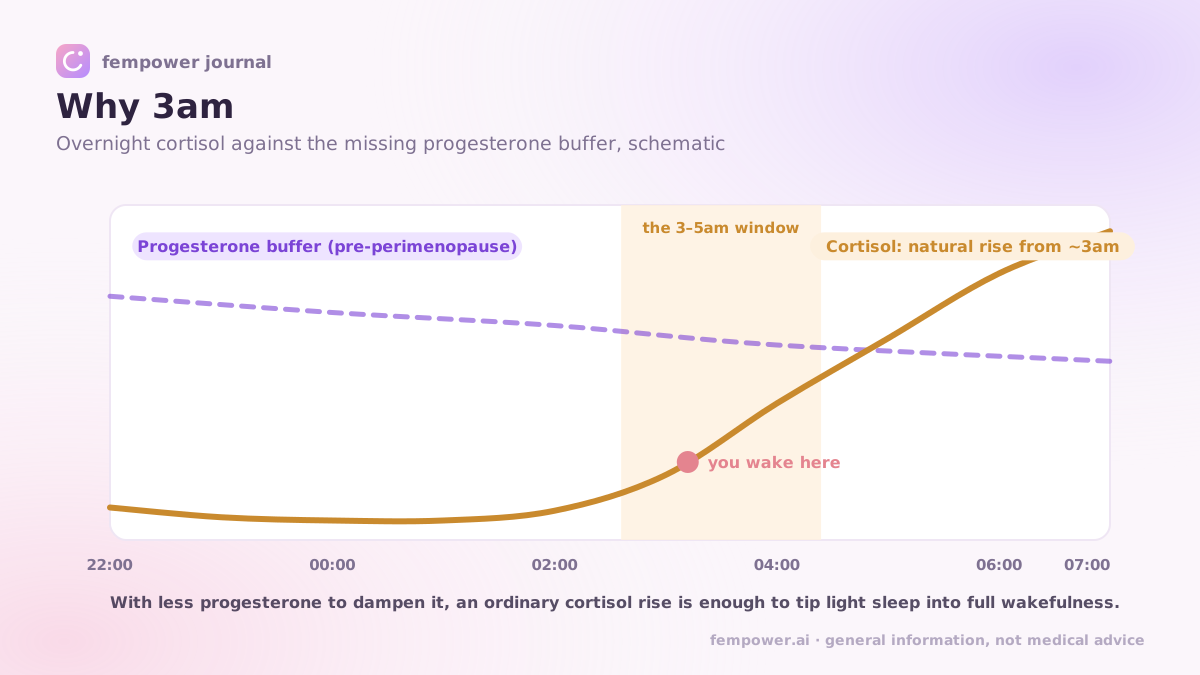
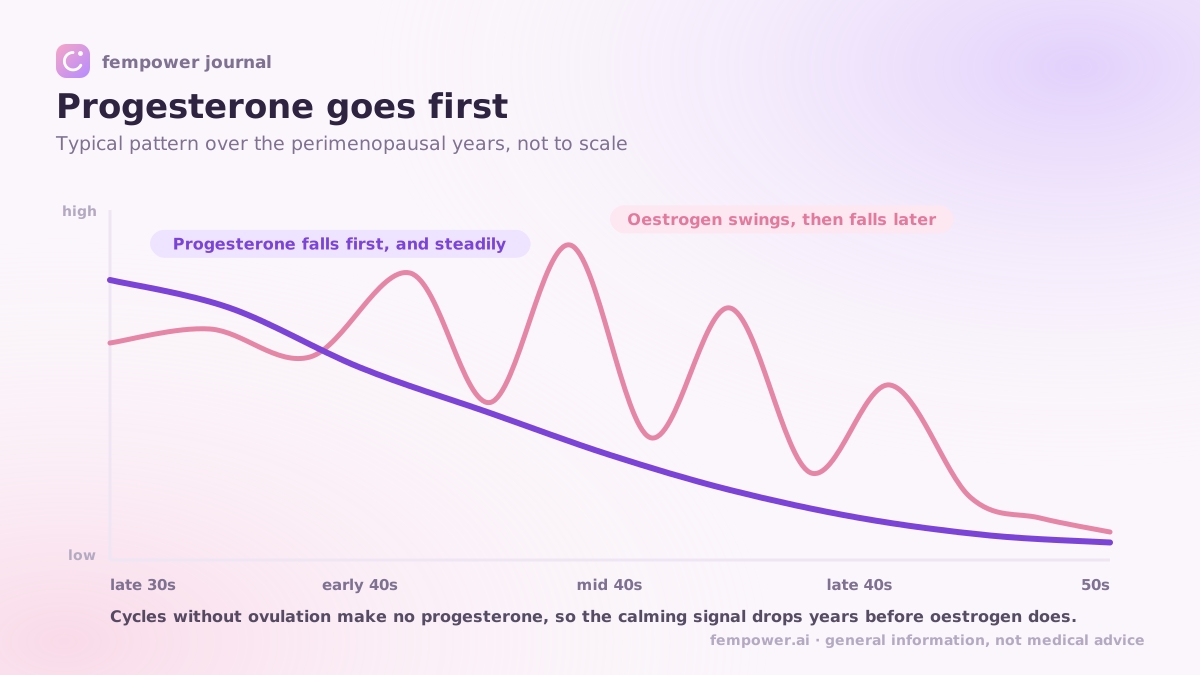
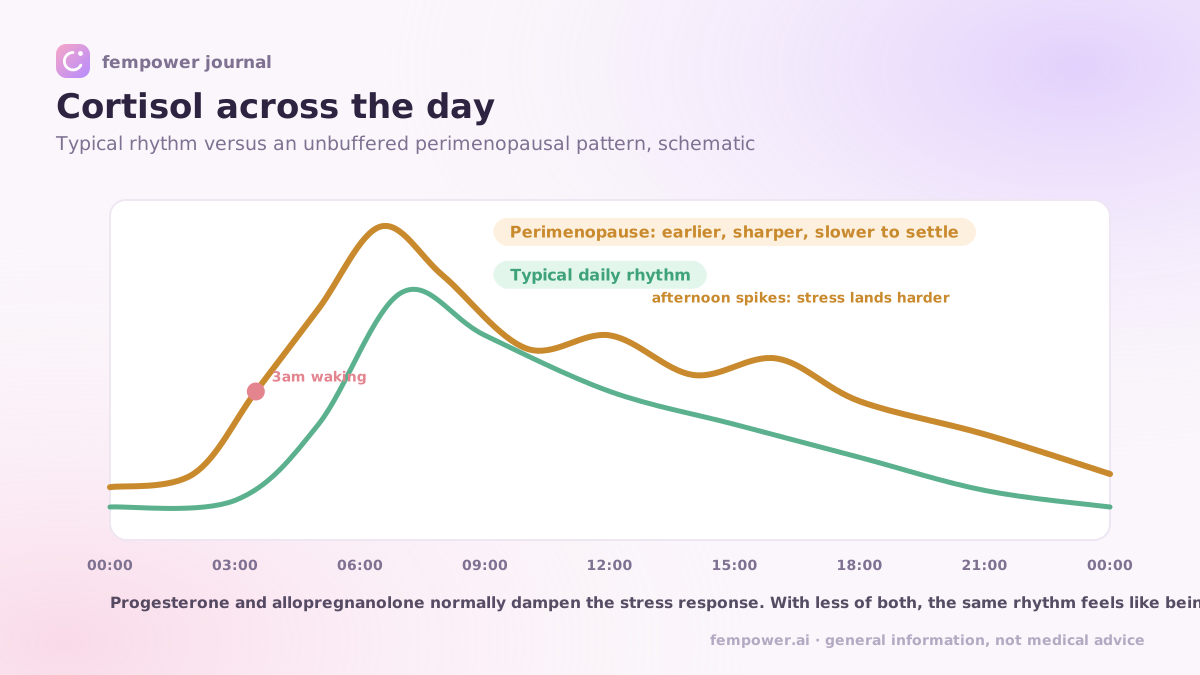
Magnesium is involved in hundreds of reactions in the body, and two of them are relevant to sleep. It blocks the NMDA receptor, part of the brain's main excitatory system, and it supports the GABA system, the main calming one. GABA is the same pathway that progesterone works on, which is why low progesterone and 3am waking so often go together. Magnesium also relaxes muscle, which is why it is suggested for restless legs and night cramps.
So the mechanism is plausible. Whether swallowing a tablet at 10pm changes how you sleep at 3am is a separate question, and only trials can answer it.
What the trials show
The honest summary is that the trials are small and short, the effects modest, and many of the participants were quite different from you. Most participants were older adults, often with a diagnosed insomnia disorder, and several trials selected people who were already low in magnesium. Low magnesium is uncommon in women eating a reasonable diet, so the results do not automatically transfer.
A 2021 systematic review and meta-analysis pooled the randomised trials in older adults with insomnia. It found that magnesium shortened the time to fall asleep by roughly 17 minutes on average, with no clear effect on total sleep time. The authors rated the quality of the evidence as low, because the trials were small and at risk of bias. That is a fair description: a real but small effect on falling asleep, from studies that could easily be wrong in either direction.
- Best evidence: modest help with falling asleep, in older adults with insomnia.
- Weak or no evidence: staying asleep, waking at 3am, sleep quality in perimenopause specifically.
- Not studied properly at all: magnesium for perimenopausal night sweats or anxiety-driven waking.
It may still help you. Nobody has run the trial that would tell you, so you have to run a small version yourself.
Which form, and how much
The label on the front of the bottle tells you the compound. The number that matters is the elemental magnesium on the back, which is what your body gets.
- Magnesium glycinate (bisglycinate): bound to the amino acid glycine, well absorbed, gentle on the gut. The form most people choose for sleep.
- Magnesium citrate: well absorbed but draws water into the bowel. Useful if you are constipated, less useful at bedtime otherwise.
- Magnesium oxide: cheap and common, but poorly absorbed. A large share of it passes straight through.
- Magnesium threonate and taurate: marketed for brain and heart. Plausible, but the trials are even smaller.
The trials used somewhere around 200 to 400 mg of elemental magnesium a day, usually in the evening. Above that, loose stools are common and there is no evidence of extra benefit. The UK reference intake for adult women is 270 mg a day, which most people get some of from food, so supplements in that range are a top-up, well short of a mega-dose. Check with your GP or pharmacist first if you have kidney disease, take medicines for blood pressure, antibiotics, bisphosphonates or diuretics, or are on anything you are not sure about. Magnesium can change how some of them are absorbed.
Food first, or at least alongside
Pumpkin seeds, almonds, cashews, spinach, black beans, oats, dark chocolate and wholegrain bread all carry useful amounts. A handful of pumpkin seeds is roughly 150 mg. You can't time food for bedtime. What it does is keep your baseline up, which is the situation the trials suggest matters most.
How to run a fair ten-day trial
Most people take magnesium for a few nights, sleep badly once, and conclude nothing. Or sleep well once and conclude everything. Neither tells you anything. A fair trial looks like this:
- Pick one form and one amount. Glycinate, 200 to 300 mg elemental, an hour before bed is a sensible default.
- Log your sleep for a week before you start, so you know what normal looks like. Time you woke, how long you were awake, how you felt at 8am.
- Take it every night for ten nights. Change nothing else if you can help it.
- Log the same three things every morning, as a record.
- On day ten, compare. If nothing has moved, stop. If it has, keep going and check again in a month.
Magnesium is a reasonable first thing to try. The strongest evidence for perimenopausal sleep belongs to CBT for insomnia and, where sleep tracks the cycle, progesterone. Try it, measure it, and if it does not earn its place, move on to something that might.
Questions people ask
- Does magnesium help you sleep?
- Modestly, according to small trials in older adults with insomnia. It seems to help people fall asleep a little faster. There is no good evidence yet that it helps with staying asleep or with 3am waking in perimenopause specifically.
- Which magnesium is best for sleep?
- Magnesium glycinate (bisglycinate) is the form most people tolerate well and choose for sleep. Citrate has a laxative effect and oxide is poorly absorbed.
- How much magnesium should I take for sleep?
- Trials typically used around 200 to 400 mg of elemental magnesium in the evening. Check the elemental amount on the label, and speak to your GP or pharmacist first if you have kidney disease or take regular medicines.
- How long does magnesium take to work for sleep?
- Give it a fair trial of about ten nights while logging when you wake and how you feel in the morning. If nothing has changed by then, it is unlikely to.
References
- Oral magnesium supplementation for insomnia in older adults: a systematic review and meta-analysis. BMC Complementary Medicine and Therapies (Mah J, Pitre T), 2021.
- Menopause: identification and management (NG23). NICE, 2024.
- Government Dietary Recommendations: nutrient reference values for magnesium. Public Health England, 2016.
- Sleep and the menopause: fact sheet. British Menopause Society, 2023.